
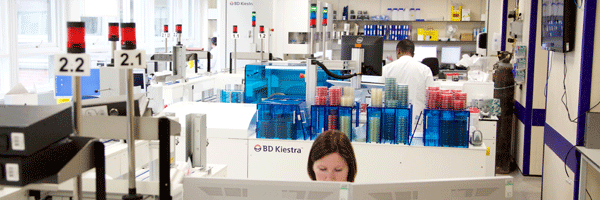
Our microbiology laboratories, based at St George’s Hospital, use sophisticated automated equipment alongside a wide range of advanced techniques to detect, identify and treat infections and to prevent the spread of infection. We specialise in:
- bacteriology
- virology
- molecular diagnostics
- mycology
- parasitology.
Read the flow chart for ordering urgent or out-of-hours microbiology tests (hospital only)
There has been great investment in new technology within microbiology. The laboratory is now one of the most advanced in the UK and has been visited by private healthcare companies from the UK, Europe, China and Australia as well as other NHS hospitals.
We offer:
- dedicated operational and clinical support
- a fully UKAS accredited laboratory
- logistical set up and results reporting to meet your requirements.
Our clinical advice service for all diagnostic results is available 24 hours a day, seven days a week.
Covid-19
Our virology laboratories have been at the forefront of Covid-19 antibody and antigen testing since the outbreak began in 2020, during which time we have tested thousands of samples. At the outset of the pandemic, our team of clinical scientists rapidly validated new assays and workflows for molecular testing, completing the work in a short timeframe to allow testing to begin.
As testing methodologies and technologies have changed over the course of the pandemic, we have been able to offer quicker, more accurate testing, reducing the turnaround time for the antigen test to between 24 to 48 hours. We have invested in the most cutting-edge equipment to allow us to offer the best possible service and to provide resilience by using a number of different testing platforms.
Molecular diagnostics
Molecular diagnostics is a rapidly developing area in healthcare and will have a dramatic impact on the speed, efficiency and accuracy of diagnostic medicine.
We were one of the first hospital laboratories in the UK to have acquired a fully automated molecular diagnostics system, giving us the technology to detect pathogens quickly and accurately enabling patients to receive their diagnosis and treatment faster.
One molecular technique we have been using for many years is Polymerase Chain Reaction (PCR). Our current repertoire using PCR includes:
- Covid-19
- norovirus
- Chlamydia trachomatis and Neisseria gonorrhoeae
- Trichomonas vaginalis and Mycoplasma genitalium
- CSF viruses
- Respiratory viruses
- quantitative HIV, HCV, HBV viral loads
- MRSA
- Carbapenemase resistance.
Our fully automated analysers can deliver results efficiently and quickly with the ability to deliver 300 results in less than three and a half hours.
In addition, we can process 24 different molecular disease states simultaneously for same day testing.
Latent TB
We have significant capacity to carry out latent TB testing using the Quantiferon Gold Plus testing method. Using this technology, we are able to run many tests a day, with an average turnaround time of three to five days.
In support of this service we have clinical expertise from leading TB experts at St George’s University Hospital NHS Foundation Trust.
Faecal Immunochemical Test (FIT)
We perform FIT testing for seven boroughs in London, offering a complete service including distribution of the kits, processing the specimens and managing results. We are able to provide results within 48 hours.
Blood borne pathogens
We have developed an innovative solution to blood borne pathogen screening using capillary blood testing (CBT) – this is less invasive and requires smaller amounts of blood than venous sampling by phlebotomy. Samples can easily be taken in the community and sample quality is retained by additives in the sample tube. The sample remains liquid and retains the ability to offer quantitative results for monitoring infectious disease pathogens.
Our UKAS accredited dilution technique allows multiple tests to be carried out on a single CBT sample which includes antibodies, antigens and either DNA or RNA testing on the same capillary blood sample.